Contributors
.png)
Jane Bogust
Founder at Double Undies

Rebekah Davidson
Founder & Physiotherapist at Epic Physio
Subscribe to our newsletter
Thank you! Your submission has been received!
Oops! Something went wrong while submitting the form.

.png)
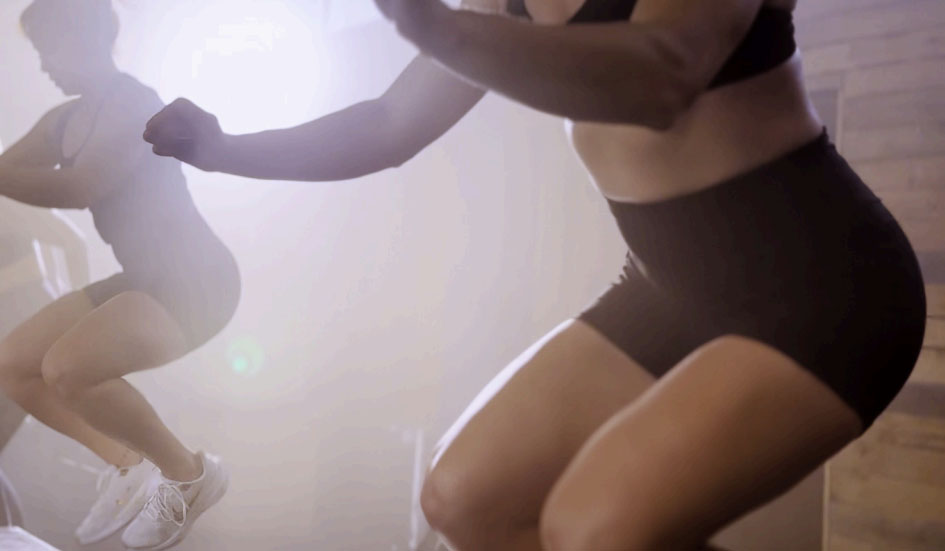
"Three... two... one... GO."
The coach starts the clock. You pick up your skipping rope. One jump. Two jumps. Then it happens. A small leak.
In an instant, your focus shifts. You're no longer thinking about your breathing, your technique or finishing the workout. Instead, your mind races. Can anyone tell? Has it gone through my leggings? Do I smell?
For many women, this experience isn't a one-off. It happens during a run, a box jump, or a game of netball. Jumping on the trampoline with the kids or even a sneeze halfway through bootcamp. For far too many women, it's the beginning of a bigger journey.
We often talk about the barriers preventing women from exercising. Lack of time, busy families, injuries, motivation even. But there's another barrier that's rarely discussed. Bladder leaks during exercise.
Research shows 1 in 3 women participating in sport experience pelvic floor symptoms, including bladder leakage during exercise.
In high-impact sports involving running, jumping and heavy lifting, some studies have reported rates as high as 80%.
Research shows women often begin adapting their lives in subtle ways. They choose black leggings, avoid certain exercises, empty their bladder repeatedly before training, restrict fluid intake, stand near exits or quietly modify workouts to avoid movements that might trigger a leak.
Around 1 in 2 women experiencing these symptoms stop participating in that form of exercise altogether.
Think about that for a moment.
Not one in two women stop because they don't enjoy exercise or because they aren't motivated. Not because they aren't capable or they're worried they'll leak.
Over time, those small changes become bigger ones. Many women simply stop showing up. That's not because they suddenly stop loving their sport. It's because of how leaking makes them feel.
Yet despite how common it is, it's still one of the least talked about barriers to women exercising.
As someone who has spent years in CrossFit, that statistic doesn't surprise me. Because I've lived it.
Double Undies wasn't created in a boardroom. It wasn't born from a business plan. It started during a CrossFit workout.
I leaked doing double unders (skipping). I remember feeling horrified! Genuinely embarrassed. The kind of embarrassment that followed me home long after the workout had finished.
I assumed I was the only one. But when I finally started talking to the women at my gym, I realised I wasn't alone. Knowing other women experienced the same thing made me feel less isolated, but it didn't take away the worry. Or the fear of embarrassment.
When I first started looking for a solution after my own CrossFit experience, I assumed there would be something designed specifically for leaks and active women. Instead, I found continence products that made me feel old before my time, bulky pads that shifted and moved during exercise, or period underwear that wasn't designed for leaks and repeated impact of jumping, running and lifting.
None of it felt like it had been created for women like me, a women who loved to move, who simply wanted to train without constantly wondering whether today would be another day they'd walk away feeling embarrassed.
So, I decided to create it myself. At the time, I thought I was solving my own problem. I had no idea I was about to discover just how many women were carrying exactly the same secret.
The more I started talking about it, the more women shared their own stories.
"That happens to me too."
"I thought I was the only one."
"I've stopped running because of it."
"I don't jump anymore."
"I always wear black leggings, just in case."
Some had never told anyone before.
What I realised wasn't that leaking was rare, it was that we'd all become experts at hiding it. Those conversations didn't stop. They became hundreds, then thousands. Women of every age and every fitness level sharing almost identical experiences. Some had recently had babies, others had never been pregnant. Some were navigating perimenopause, while others were elite athletes.
The common thread wasn't weakness. It wasn't age. It wasn't fitness. It was silence.
The impact of leakage can last years. That's stayed with me, because it captures exactly what so many women describe.
A leak isn't simply an inconvenience. For many women, it changes the way they see themselves. Exercise is rarely just about exercise, it's where friendships are built. It's stress relief after a hard day, it's confidence and it's routine.
It's proving to yourself that your body is capable of incredible things. It's saying yes to a weekend hike. Joining your local football team. Running around with your kids. Training for your first HYROX. Celebrating a personal best. Feeling strong, healthy and feeling like you. When leaking begins to dictate whether someone attends a class, signs up for a race or joins a team, the loss extends far beyond physical activity.
Women don't just lose exercise, they lose confidence, they lose community, they lose part of their identity.
And perhaps most importantly, they lose the freedom to move without fear.
And yet, so many continue to suffer in silence because they believe it's simply part of being a woman, or part of having had children, or getting older.

It can be a sign that your pelvic floor isn't coping with the pressure being placed upon it during movement. The pressure on your pelvic floor (we call it the intraabdominal pressure (IAP) increases during various activities such as holding your breath, laughing, squatting, running, jumping gymnastics, CrossFit, HYROX and heavy lifting. Coughing and sneezing are one of the hardest things for your pelvic floor to cope with because the spike in IAP happens so quickly.
The reasons why your pelvic floor might not be coping are also extensive. Pregnancy isn't the only reason. Hormonal changes during perimenopause and menopause can reduce the strength and elasticity of pelvic floor tissues. Constant pressure on the pelvic floor from constipation, chronic coughing, and carrying extra weight also weakens the pelvic floor over time. Previous surgeries, genetics and even consistently holding your breath while lifting can all contribute.
Several factors can be contributing at the same time. Managing the IAP looks slightly different for everyone, because we all move differently and may increase our IAP in different ways. One of the easiest ways to change it is breathing OUT on the hardest part of the move. Let's take a squat for example, you breathe in on your way down, just before you engage your legs to push back up, start breathing out. You should be ready for another breath in at the top. This allows you to use the movement of your respiratory diaphragm to offload some of the IAP on your pelvic floor.
The pelvic floor can be failing in multiple ways too. We have a spectrum of dysfunction with overactive (too tight) at one end, and under active (too weak) at the other. You might sit anywhere on the spectrum. If you have an overactive pelvic floor then you may also have a weak pelvic floor once you can get it to relax. A weak pelvic floor is having difficulty contracting enough to hold the urine in and an overactive pelvic floor has nowhere else to go when it's asked to work (like it's been doing a 1 rep max and failed).
A healthy pelvic floor functions like a trampoline. It is constantly under tension, but it should be able to go long (when downwards pressure is applied), it should be able to go short (the tramp recoils and sends you skyward) and it should rest at 50% of its resting length where it is most efficient. If the pelvic floor can not move through all these ranges efficiently, then we can have leakage problems when we increase the IAP and the pelvic floor can not cope with the changes.
The pelvic floor should also be able to do a long, slow contraction for changes in posture and a quick, fast contraction for managing a cough or sneeze. The important thing to remember is that leaking is a symptom of something that needs attention, it isn't a life sentence.
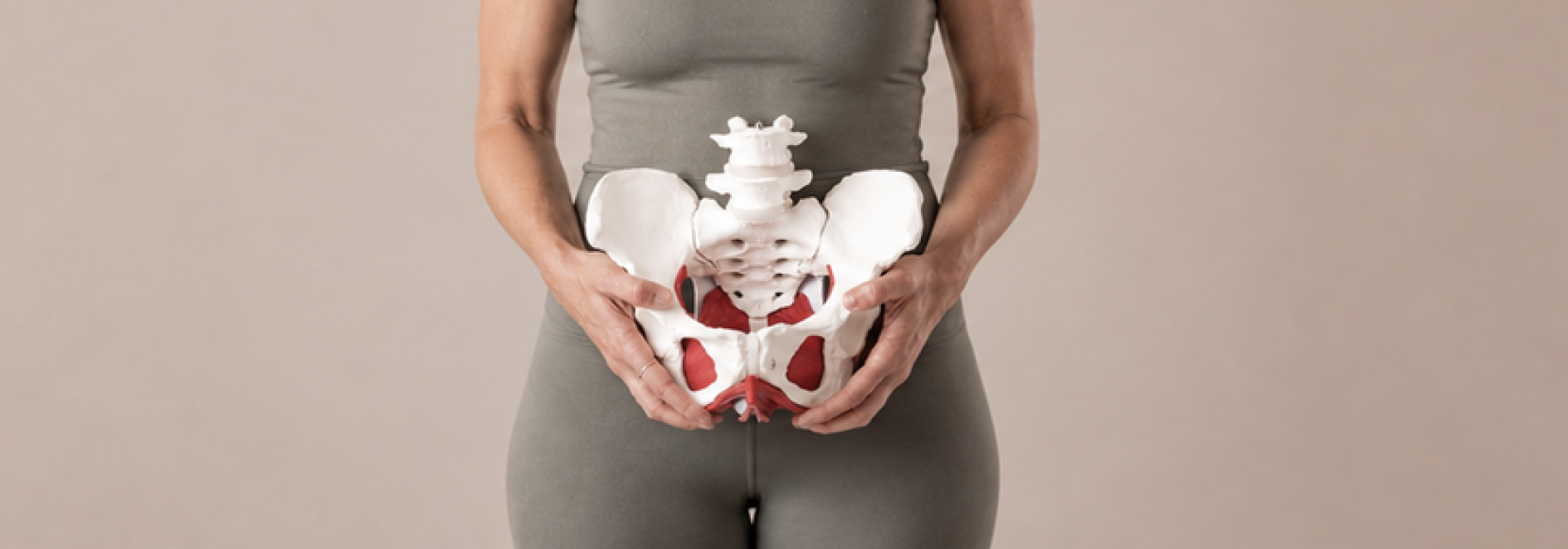
Pelvic floor physiotherapist, Rebekah says the first step is recognising that help is available. "Many women believe that bladder leakage is part of being a woman and that's just how it is, but it is not" she explains. "Your pelvic floor is made up of muscles, just like your glutes or your core. If they're not working efficiently, they can often be retrained with the right assessment and exercise programme."
One of the biggest misconceptions, she says, is that everyone should simply "do more Kegels." "Not every pelvic floor is weak. Some are actually overactive and unable to relax properly. Others aren't coordinating with the rest of the body during movement. That's why an individual assessment is so valuable."
A pelvic floor physiotherapist can assess how those muscles are functioning, identify what's contributing to the leaks and develop a personalised treatment plan. Sometimes that's strengthening. Sometimes it's learning to relax. Sometimes it's improving breathing, lifting mechanics or pressure management. Often it's a combination of all of these.
It's worth a mention that stress incontinence that we're talking about here, isn't the only type of incontinence. There are other types like urge incontinence that may be impacting your day to day too.
During a physio session, your physio will ask you all kinds of personal questions, you don’t have to answer them, but it gives us a lot of information about what might be happening for you. They’ll tell you all about your pelvic floor and how it works. They may perform an internal exam with your fully informed consent. They should explain this to you in great detail so that you know exactly what will happen. It shouldn't be painful and you don’t have to do it. We can access the pelvic floor from the outside, and make an educated guess as to what’s happening on the inside. Due to their location an internal exam is the only way to feel what’s happening to the pelvic floor muscles. You can withdraw your consent at any time. The internal exam might only take a few minutes. You should walk away from your first appointment with some really useful changes to make and start noticing changes in your continence as early as 4 weeks. Mostly, people are pleasantly surprised at how easy the appointment is.
The earlier women seek help, the better. Because the longer symptoms are ignored, the more likely women are to change their lives around them.
Most women don't stop exercising because they leak. They stop because of how leaking makes them feel - embarrassed, ashamed, self-conscious, different.
They start second-guessing themselves before they've even walked in the door. Will there be skipping? Will there be box jumps? What if someone notices? So, one day, they stop going altogether.
This is our mission: to stop women from giving up the movement they love because of how leaks make them feel. That's so much bigger.
Because rehabilitation takes time, life doesn't stop while you're waiting for your pelvic floor to improve. We still want to train, to run, compete, play with our kids, laugh without worrying and participate in life.
That's exactly why I created Double Undies - something that restores confidence and confidence is what lets women keep exercising. Exercise gives them strength, friendships, resilience, stress relief, better mental health and a sense of who they are.
So in a way, Double Undies isn't really about underwear. It's about protecting everything that exercise gives women. Because giving up exercise shouldn't be the solution. Movement is one of the best things we can do for our physical health, our mental wellbeing and our confidence. The goal shouldn't be to avoid it. The goal should be to help more women keep doing it.
Katie, Runner
"I'm running long distances again with complete peace of mind."
Nicole
"I won't go to the gym without my Double Undies now—they've completely changed my confidence."
Jaimee, Powerlifter
"I can focus on my lifts instead of worrying about leaks."
The reality is that bladder leaks are incredibly common. What's uncommon is talking about them.
Imagine if one in three women tore a muscle every time they exercised. We'd be discussing prevention, coaching, treatment and research. Instead, because the pelvic floor sits behind a layer of embarrassment, too many women simply carry on pretending everything is okay. Or they quietly stop.
Somewhere this week, a woman will quietly decide not to go for a run. She'll tell herself she's too busy, too tired, maybe next week. But the real reason is she's worried she'll leak. She won't tell her friends or her coach. She might not even tell her partner. She'll simply stop showing up.
This article is for her. These days, I wear colour again. Not because leaking never happens anymore - sometimes it still does - but because I've got a barrier that means it stays my secret, not the room's. That's what I want for her too. Not a fix. Just enough confidence to keep showing up. Because a bladder leak might last only a few seconds, but it should never be the reason a woman gives up the movement she loves.
1. Stop just-in-case weeing
It might feel like you're preventing leaks, but repeatedly emptying your bladder "just in case" can actually train it to signal the urge to go sooner. Try trusting your bladder and only go when you genuinely need to.
2. Breathe through the hardest part
Whether you're standing up from a squat, lifting a barbell or getting off the floor, breathe out during the effort. Managing pressure inside your abdomen can reduce the load on your pelvic floor and help it do its job more effectively.
3. Don't assume you need more Kegels
Not every leaking pelvic floor is weak. Some are actually too tight or not coordinating properly. Before starting exercises you've found online, get assessed so you're treating the right problem.
4. Book a pelvic floor physio
You wouldn't ignore a sore shoulder for years, so don't ignore your pelvic floor. A pelvic floor physiotherapist can identify what's causing your leaks and create a plan that's specific to you. Many women notice improvements within weeks.
5. Keep moving with confidence
Leaking shouldn't mean giving up the exercise you love. Modify if you need to, get the right support, work on your pelvic floor and keep showing up. Your health, confidence and community are worth protecting.
Living with bladder leakage can be frustrating, embarrassing, and sometimes even stop us from doing the things we enjoy.
Epic Physio and Double Undies have created a 7-Day Continence Course. The course is designed to help you better understand your bladder, learn practical strategies to improve symptoms, and feel more confident in your day-to-day life.
Small changes can make a big difference. Join us for seven days of expert guidance, support, and simple steps towards better bladder health.
Ready to get started? Click the link in on our profile, we'd love to have you along! FREE 7-Day Continence Course
Double Undies is designed for exactly this — so you can keep showing up, however your body is that day.
Shop the range at www.doubleundies.co.nz
Dakic JG et al. (2022). Pelvic Floor Symptoms Are an Overlooked Barrier to Exercise Participation. APTA
Dakic JG et al. (2023). Experience of Playing Sport or Exercising for Women with Pelvic Floor Symptoms. Springer
Ferreira S et al. (2024). Urinary Incontinence in Female Athletes: A Systematic Review on Prevalence and Physical Therapy Approaches. PMC
Pires T et al. (2020). Prevalence of Urinary Incontinence in High-Impact Sport Athletes: A Systematic Review and Meta-analysis. PMC
Epic Physio www.epicphysio.co.nz